

Agrivoltaics: The Future of Farming?
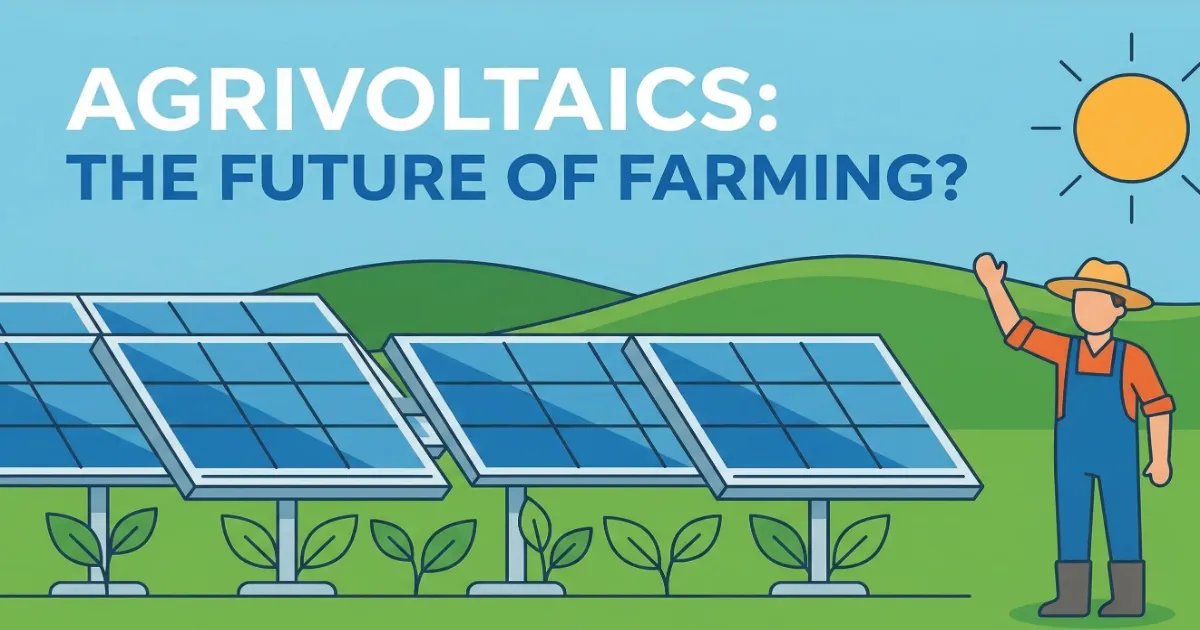
In an era where land is becoming increasingly scarce, the world faces a dual challenge: feeding a growing population while transitioning to clean energy. What if we could do both on the same piece of land? Enter agrivoltaics—the innovative practice of combining solar power generation with traditional farming. Also known as agrisolar or agrophotovoltaics, this approach mounts solar panels above or among crops and livestock, creating a symbiotic system that harvests both food and electricity.
But is it really the future of farming? With climate change intensifying droughts, extreme weather, and land-use conflicts between solar farms and agriculture, agrivoltaics offers a compelling solution. By strategically placing solar panels on farmland, we can boost land productivity, conserve water, diversify farmer incomes, and accelerate the renewable energy revolution. Let's dive into why putting solar panels on farmland might just be one of the smartest moves for sustainable development.
Understanding Agrivoltaics
Agrivoltaics isn't entirely new—the concept dates back to the 1980s in Japan—but technological advancements and urgent sustainability needs have propelled it into the spotlight. The setup typically involves elevating solar photovoltaic (PV) panels several meters above the ground or spacing them to allow farming activities below or between rows. This can include overhead structures for crops, inter-row planting, or even vertical bifacial panels that act like living fences.
There are variations: some systems use trackers that follow the sun while adjusting height for machinery access; others integrate with greenhouses or livestock grazing, where sheep munch grass under the arrays, naturally managing vegetation.
The magic lies in dual-use. Instead of choosing between food or energy, agrivoltaic systems aim for "both." Global installed capacity has surged from about 5 MW in 2012 to over 14 GW recently, with the US alone boasting 596 projects covering 66,000 acres and producing 10 GW—enough to power millions of homes. In India, with its ambitious renewable targets, this approach is gaining traction fast.
The Compelling Benefits
The primary advantage is enhanced land-use efficiency, measured by the Land Equivalent Ratio (LER). An LER greater than 1 means the combined system outperforms separate agriculture and solar setups. Studies show LERs ranging from 1.35 to 1.86 or higher. For instance, research in Germany achieved 1.5 for wheat systems and up to 1.86 for potatoes. In India, the Central Arid Zone Research Institute (CAZRI) in Jodhpur reported an impressive LER of 1.41.
This efficiency addresses the looming crisis of land scarcity. As solar energy scales up to meet climate goals, traditional ground-mounted solar farms can displace productive farmland. Agrivoltaics mitigates this by sharing space.
Water conservation is another huge win, critical in water-stressed regions like much of India. Panels provide shade that reduces soil evaporation and plant transpiration. Reports indicate water savings of 14% to as much as 50%, with water-use efficiency improvements of 20-47%. Lower temperatures under panels (1-4°C cooler) alleviate heat stress, which is particularly beneficial for crops in hot, arid climates. In semi-arid areas, shading can even boost yields for certain crops like soybeans by mitigating drought effects.
Crop yields vary by design, climate, and species. Shade-tolerant plants such as lettuce, berries, spinach, or some vegetables often thrive or maintain production. In dry conditions, many crops see resilience gains—protection from hail, excessive sun, or frost. Livestock benefits too: animals get shade, reducing heat stress, while grazing keeps land clear.
Economically, it's transformative for farmers. Solar energy provides a stable second income stream through power purchase agreements or leases. Studies show total revenue per hectare can be 4 to 15 times higher than agriculture alone, with electricity often accounting for 75-90% of earnings. In India, some models offer farmers annual earnings boosts, like lease payments plus farming proceeds—up to Rs. 1-2 lakh per acre in promising cases. Payback periods are competitive, around 7-10 years, and in sunny India, the levelized cost of energy for agrivoltaics can dip as low as INR 2-3/kWh thanks to high irradiance and possible subsidies under schemes like PM-KUSUM.
Environmentally, it lowers GHG emissions, supports biodiversity with pollinator habitats or understory growth, and creates beneficial microclimates. Panels may even generate more electricity thanks to evaporative cooling from plants below.
Real-World Success in India and Beyond
India, with its vast agricultural base and 500 GW non-fossil energy target by 2030, is perfectly positioned. Pilot projects started in Gujarat around 2012, including GIPCL plants growing groundnuts, soybeans, and vegetables under 1 MW arrays. The CAZRI Jodhpur site tests arid crops like cumin and chickpea alongside panels equipped with rainwater harvesting.
In Maharashtra's Parbhani, a 1.4 MW project demonstrates coexistence, with farmers managing crops while panels generate power. Cochin International Airport's interspace system grows vegetables under its massive solar array. Other efforts in Delhi (KVK Ujwa), Rajasthan, and Uttar Pradesh (Dayalbagh, Amity University) experiment with tomatoes, pulses, turmeric, and more, showing promising results with optimized shading.
Internationally, Colorado's Jack's Solar Garden produces over 25,000 pounds of vegetables alongside 1.2 MW of solar power, while Dutch and French projects thrive with berries, potatoes, and vineyards. These prove scalability with tailored designs.
Addressing the Challenges
It's not without hurdles. Initial installation costs are 5-40% higher than standard solar due to elevated structures and spacing. Farmers worry about machinery access, panel maintenance, or yield drops for light-hungry crops like maize in certain humid regions (potential 16-24% reductions if shading is excessive).
Regulatory issues—land use policies classifying solar as non-agricultural—and the need for farmer training exist. However, policy support like India's PM-KUSUM scheme (with potential 10 GW agrivoltaics component) or international incentives can help. Designs are improving with AI, bifacial tech, and adjustable systems to minimize trade-offs.
Looking Ahead: A Synergistic Future
With population projected to hit 10 billion and energy demands soaring, single-use land is inefficient. Agrivoltaics aligns perfectly with sustainable development goals for zero hunger, clean energy, and climate action. Advancements in semi-transparent panels, vertical farming integration, and precision agriculture will only enhance viability.
Governments should incentivize through subsidies, streamlined approvals, and R&D funding. Farmers can transition gradually via pilots. The global market is exploding—projected to reach $180 billion by 2034 with a 31%+ CAGR—signaling massive momentum.
Conclusion
Agrivoltaics isn't just putting solar panels on farmland; it's reimagining land as a multi-productive asset. It offers higher overall yields, water savings, stable incomes, and a path to climate resilience. While challenges remain, the evidence from pilots worldwide—especially India's growing ecosystem—suggests it's not only feasible but essential.
The future of farming? Quite possibly yes. By embracing this dual-harvest approach, we can secure food, power our world cleanly, and empower rural communities. It's time for policymakers, farmers, and innovators (including right here in India) to invest in agrivoltaics—for a greener, more prosperous tomorrow.