

Best-Performing Startups in Africa 2025
Fri Dec 05 2025
When researching recent advances in electric vehicles (EVs), I came across a number of high-performing tech startups across Africa — and it struck me how often the global spotlight overlooks innovation emerging from that continent. I felt compelled to dig deeper and share what I found. Africa’s tech market is too important — and too underrated — to ignore, so this is my small effort to spotlight brilliant companies making real impact.
My aim is simple: to shine a light on African innovation, amplify success stories, and help spread the word.
In 2025, Africa’s startup ecosystem is experiencing a major inflection. The continent saw massive capital inflows — by some metrics, over US$2.2 billion raised by September 2025 — and a growing number of companies scaling rapidly. This momentum is powered by a blend of increasing digital adoption, growing demand for financial inclusion, renewable energy needs, and youthful entrepreneurial energy. For investors, founders, and global tech watchers, Africa in 2025 is no longer a “rising” startup region — it’s already rising.
Standout African Startups of 2025
Here are some of the best-performing and most promising startups across Africa in 2025 — companies that combine strong growth metrics, meaningful impact, and clear potential.
| Startup | Country / Region |
|---|---|
| PalmPay | Nigeria & beyond |
| eShandi | Zambia & multiple African countries |
| Paymenow | South Africa & wider region |
| Inkomoko | Rwanda |
| Chari | Morocco / North Africa |
| M‑KOPA | Kenya & Eastern Africa |
| TymeBank | South Africa (and broader African markets) |
Startup Deepdive
PalmPay
b6b754bc-0a21-4f.png?w=640&q=100)
Country: Nigeria & beyond
Since its founding in 2019, PalmPay has grown from a mobile-money startup in Lagos to a major digital-finance platform — often called a “neobank for the next billion.” It aims to bring banking, payments, savings, and credit to millions of people across Africa who lack access to traditional banking.
PalmPay’s mobile app and broad agent/merchant network together form a full-featured financial ecosystem. Through PalmPay, users can:
-
Send and receive money instantly
-
Pay bills, top up airtime, settle utilities
-
Save or invest via its savings product (PalmPay Wealth)
-
Get access to micro-credit or small-loan options
-
Use products tailored to both consumers and small businesses
Because of the combination of smartphone-based services and a widespread agent network, PalmPay works both for digitally savvy users and those without advanced banking access — helping expand financial inclusion.
PalmPay’s growth has been dramatic. As of 2025, the company serves more than 35 million registered users and reportedly handles around 15 million transactions daily. In 2024 alone, its savings product paid out ₦4 billion in interest to over 10 million users, highlighting its appeal for everyday savers.
Recognition for this growth has followed: PalmPay was ranked among the world’s top fintech firms by leading global trackers, and was named one of Africa’s fastest-growing fintech companies in 2025.
eShandi

Country: Zambia & multiple African countries
eShandi began life in 2019 (formerly “PremierCredit”) and has since evolved into a pan-African fintech challenger addressing the financial needs of underserved individuals and small businesses. Its mission is simple but powerful: bring accessible, affordable financial services to people often excluded by traditional banks.
At the core of eShandi’s offering is an AI-powered credit-scoring and lending platform that taps alternative data — such as mobile-money transaction history, smartphone usage, and digital-wallet behaviour — to evaluate creditworthiness. This allows eShandi to offer collateral-free, instant digital loans even to customers lacking formal financial documentation.
Beyond credit, eShandi provides digital banking, mobile wallets, seamless payments, earned-wage access, and tailored services for small and medium enterprises (SMEs). It operates across several African markets including Zambia, South Africa, Kenya and Zimbabwe, aiming to extend banking access across the region.
Why eShandi matters: it bridges a long-standing gap in financial inclusion by offering modern banking and credit tools to populations traditionally excluded from the formal banking system. Through technology, data-driven underwriting and simplicity of access, eShandi is helping redefine what banking means in emerging markets — enabling individuals and small businesses to access credit, manage money, and participate in the digital economy.
Paymenow
Country: South Africa & wider region
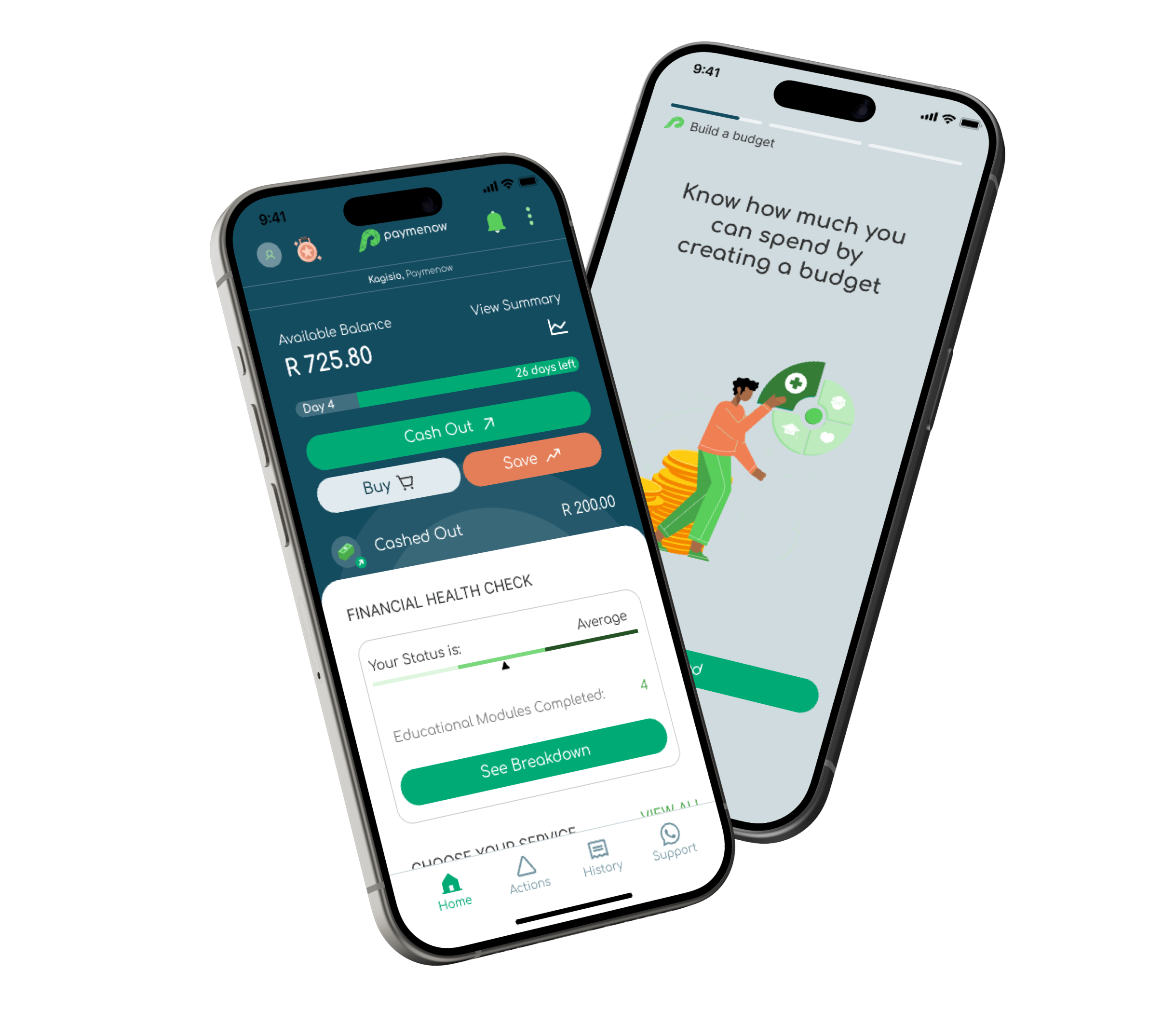
Paymenow is a fintech and financial-wellness platform based in South Africa that provides workers early access to wages they’ve already earned rather than forcing them to wait for payday. Known as Earned Wage Access (EWA), this service helps employees avoid high-interest payday loans and reduces financial stress.
Early access to earned wages: Users can withdraw a portion of their salary before payday to cover urgent expenses — offering liquidity when needed.
Financial wellness tools: The app bundles savings accounts, financial-education content, budgeting tools and financial-health tracking to help users improve long-term money management.
Employer-friendly integration: Paymenow integrates with employer payroll systems and distributes funds directly to employees’ bank accounts — often at no extra cost to employers.
In many African markets, monthly pay cycles and limited access to credit mean households face frequent cash-flow shortfalls, often resorting to informal or predatory lenders. Paymenow offers a responsible alternative — reducing debt, improving financial stability, and restoring dignity by giving employees choice over when they receive wages.
With backing from major financial institutions (including a recent ZAR 400 million facility) to scale across Southern Africa, Paymenow is positioning itself as a leading platform for financial inclusion, wellness and stability — one paycheck at a time.
Inkomoko
Country: Rwanda
Inkomoko is a social-enterprise and business-support organisation founded in 2012, originally in Rwanda. Over the years, it has expanded across East and Central Africa to support micro, small and medium enterprises — with a strong focus on displaced persons, refugees, and marginalized communities.
-
Offers training, coaching, and business advisory services to entrepreneurs to help them build, manage, and grow their businesses.
-
Provides affordable financing and loans, often to entrepreneurs who lack traditional collateral — enabling access to capital for small business owners, refugees, and underserved individuals.
-
Helps clients plug into market networks and supply chains, enabling access to larger markets, stable demand, and sustainable business growth.
-
Over 100,000 entrepreneurs supported across multiple countries, including Rwanda, Kenya, Ethiopia, South Sudan, and Chad.
-
More than US$35 million invested into small and micro businesses via financing and support.
-
Recognized as the 8th fastest-growing private company in Africa in 2025 — the only Rwandan firm among the top-ranked, highlighting its rapid scale and effectiveness.
Chari
Country: Morocco / North Africa
Chari is a Morocco-born B2B e-commerce and fintech startup (founded in 2020) that helps traditional “mom-and-pop” grocery and convenience stores — often referred as hanouts — streamline restocking, payments, and access to credit.
Through its mobile app, small retailers can order FMCG (fast-moving consumer goods) and get delivery within 24 hours, eliminating the need for them to close the shop or travel far to buy inventory. This model has helped over 20,000+ businesses in Morocco, and Chari has expanded operations into Tunisia and Côte d’Ivoire.
In 2025, Chari raised a US$12 million Series A — the largest such round ever raised by a startup in Morocco — reinforcing confidence in its mission and growth potential.
Crucially, Chari also secured a payment-institution license from the country’s central bank, enabling it to transform from purely a distribution platform into a “merchant super-app”: offering digital payments, micro-loans, domestic transfers, and even micro-insurance to its retailer network.
Why Chari matters: it brings modern supply-chain logistics and financial services to small informal retailers — a segment often overlooked by traditional retail and banking infrastructure. By digitizing procurement and financial flows, Chari helps these stores compete with larger chain stores — while simultaneously driving financial inclusion in emerging markets.
M‑KOPA

Country: Kenya & Eastern Africa
M-KOPA is a fintech and asset-financing platform headquartered in Nairobi that uses a “pay-as-you-go (PAYG)” model to deliver smartphones, solar kits, and digital services to underserved populations across Africa.
-
Smartphone Financing & Digital Access: Customers make an upfront deposit and then pay small daily or weekly installments — enabling many to own a smartphone for the first time.
-
Clean-Energy and Solar Solutions: M-KOPA began with solar-home systems, giving off-grid households affordable access to electricity and safer lighting.
-
Financial Inclusion & Services: Once creditworthiness is built via payment history, users unlock access to digital loans, data bundles, insurance, and broader fintech services.
Recent Milestones & Impact (2025)
-
M-KOPA turned its first ever profit in 2024 — a major milestone signalling business sustainability.
-
As of 2025, the company has reached over 7 million customers and unlocked more than US$2 billion in credit across Africa.
-
Over 40 % of customers are women, reflecting M-KOPA’s efforts toward gender-inclusive access.
Why M-KOPA Matters
M-KOPA bridges the gap between underserved communities and modern digital/financial infrastructure by offering flexible, affordable financing and access. For many users, a smartphone — once unaffordable — becomes a gateway to internet connectivity, financial services, digital jobs, and economic upliftment. Its PAYG model lowers barriers to entry while creating a scalable, sustainable business model rooted in real impact.
TymeBank

Country: South Africa (and broader African markets)
TymeBank is a South African digital-only bank founded to expand access to banking services across the economic spectrum. Rather than using traditional branches, TymeBank operates via a banking app, internet banking, and self-service kiosks in retail chains — making financial services accessible even in under-banked or remote communities.
Core Features & Services
-
No-fee transactional accounts: TymeBank offers free banking accounts (no monthly fees), enabling users to manage money, run debit orders, pay bills, buy airtime or prepaid electricity, and make online payments.
-
Savings & affordability-focused banking: With its GoalSave savings tool and transparent-fee structure, TymeBank targets everyday users seeking simple, low-cost banking.
-
Credit & buy-now-pay-later option (“MoreTyme”): For eligible customers, TymeBank offers a BNPL-style credit facility that spreads purchases into manageable instalments — helping people afford items without traditional credit lines.
-
SME & small-business finance support: Via “Business Advance,” TymeBank provides rapid access to business capital — often crucial for small enterprises needing working capital or inventory financing.
Recent Growth & Impact
By late 2024, TymeBank reached over 10 million customers — a milestone highlighting its rapid adoption and growing trust among South Africans. Its growth reflects a demand for affordable, accessible banking for underserved populations. In 2025, the bank entered South Africa’s top 100 brands, recognized for fair pricing, transparency, and ease of use.
Sectors Driving Growth in 2025
- Fintech & Digital Finance — Continues to dominate: many of the high-growth, high-valuation startups (including unicorns) are in payments, banking, lending, and financial inclusion.
- Clean Energy & Climate Tech — Companies offering solar, off-grid energy, asset financing and sustainable infrastructure (e.g. clean-energy financing, climate-related services) are gaining serious traction — driven by demand for affordable energy access.
- E-commerce & Logistics — As digital adoption increases, startups connecting retail, supply chains, and last-mile logistics across Africa’s fragmented markets are scaling rapidly.
- SME & Financial Inclusion Services — From small-business credit to mobile banking and digital wallets — startups enabling formal financial access and micro-entrepreneurship are critical to Africa’s digital economy evolution.
- Regulatory and Identity / Compliance Tech — With rising digital finance and cross-border transactions, companies offering identity verification, KYC, compliance, and fintech-backing services have high potential.
What Makes These Startups Perform So Well — Lessons from Their Success
- Solving real, urgent problems — Services like mobile payments, financial inclusion, solar-asset financing, and logistics are addressing immediate needs across millions of people. The customer base often includes underserved or previously unbanked populations.
- High growth potential with early-stage scaling — Many operate in markets with low penetration rates but high demand, giving them room to grow fast as adoption increases.
- Diverse business models — from B2C to B2B and B2B2C — Some focus on retail consumers (payments, banking), others on supporting small businesses or providing infrastructure (energy financing, logistics, SME tools).
- Local insight + global investor capital — Founders often understand local challenges deeply, while backing from venture capital and global investors brings needed capital for growth.
- Resilient to macroeconomic shifts — Despite global economic uncertainty, funding across African startups remained strong in 2025, indicating investor confidence in long-term potential.
Africa in 2025 isn’t just witnessing a startup boom — it’s experiencing a startup renaissance. The combination of real market demand, digital transformation, entrepreneurial talent, and growing investor confidence is building a new generation of African companies that are both impactful and high-growth.
For anyone interested in global innovation, emerging markets, or building solutions for real problems — now is a critical moment to watch, engage, or invest.
These startups aren’t future bets — many already show signs of becoming the backbone of Africa’s digital economy.
Fri Dec 05 2025