

8 EV Startups That Could Become the Next Tesla
Fri Dec 12 2025

The EV industry is full of ambitious startups, but very few have the engineering depth, manufacturing discipline, and market traction to truly compete with giants like Tesla, BYD, and Rivian.
This list ranks 10 EV startups using real-world indicators, not hype or marketing buzz.
The ranking is based on four measurable factors:
- Funding + Financial Strength
- Manufacturing Readiness
- Battery & Software Innovation
- Market Traction + Partnerships
Let’s break down the startups most likely to become the next global EV powerhouse.
#1 Rivian (USA)
Why It’s a Real Contender
Rivian has strong Amazon backing, a growing adventure-vehicle niche, and a fully operational manufacturing line in Illinois. Their R1T and R1S remain industry benchmarks for electric trucks.
Data Highlights
- $24B+ total funding
- Amazon order for 100,000 delivery vans
- Rapid expansion into commercial fleet electrification
#2 Lucid Motors (USA)
Why It Matters
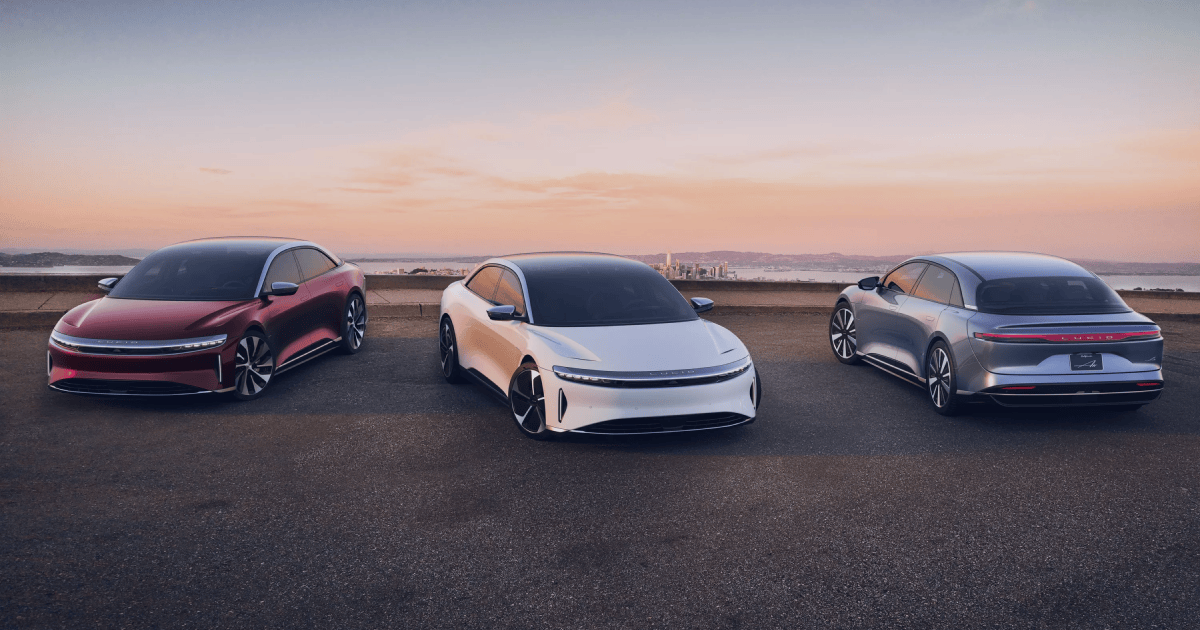
Lucid’s Air sedan has the longest EV range in the world, thanks to its ultra-efficient motors and proprietary battery systems.
Data Highlights
- 520+ miles of range on a single charge
- Saudi Arabia’s PIF owns ~60% of the company
- New factory in Arizona
#3 XPeng (China)

Why It’s Rising Fast
XPeng is China’s most software-centric EV company, pioneering advanced driver assistance and AI-based navigation that rivals Tesla FSD.
Data Highlights
- $5.5B+ funding raised
- Launched flying car prototype (AeroHT)
- Partnership with Volkswagen for EV platform sharing
#4 VinFast (Vietnam)
Why It’s a Surprising Contender
VinFast is aggressively expanding into the US and Europe, backed by Vingroup, Vietnam’s largest conglomerate.
Data Highlights
- $4B+ investment into US manufacturing
- One of the fastest-growing new EV exporters
- IPO valuation exceeded legacy automakers (briefly)
#5 Nio (China)
Why It’s Powerful
Nio is redefining EV ownership with battery swapping, subscription models, and luxury tech features.
Data Highlights
- 1,800+ battery swap stations
- High-margin software subscriptions
- Strong user community ecosystem
#6 Zeekr (China)
Why It Stands Out
Geely-owned Zeekr targets the premium EV segment with record-breaking sales growth.
Data Highlights
- Fastest EV brand to reach 100,000 units sold
- New 800V platforms for ultra-fast charging
- IPO-ready financial stability
#7 Lightyear (Netherlands)
Why It’s Unique
Lightyear builds solar-assisted EVs with record aerodynamic efficiency.
Their Lightyear 0 and Lightyear 2 show the potential for ultra-low-energy mobility.
Data Highlights
- Best-in-class drag coefficient (0.175 Cd)
- Solar charging adds up to 70 km/day in ideal conditions
- Pivot to scalable solar EV components market
#8 Ather Energy (India)

Why It’s a Future Giant in Emerging Markets
India’s EV boom begins with two-wheelers, and Ather is at the center of it, with hyper-local charging infrastructure and world-class connected scooters.
Data Highlights
- Series E funding from Hero MotoCorp
- 1,500+ fast chargers across India
- Expanding to Southeast Asia
Summary: Who Will Become the Next Tesla?
Tesla became the global EV leader not just through cars, but through battery innovation, vertical integration, and superior software.
These startups succeed because they excel in at least one of those pillars:
- Rivian → manufacturing + brand
- Lucid → battery efficiency
- XPeng / Nio / Zeekr → software + autonomy
- Fisker / Arrival → new manufacturing models
- Lightyear → next-gen energy efficiency
- Ather → dominating emerging markets
Fri Dec 12 2025